
Elevation shapes wood. It’s one of the most overlooked factors in lumber quality, and it has a direct effect on density, stability, and how a board behaves once it’s in a building.
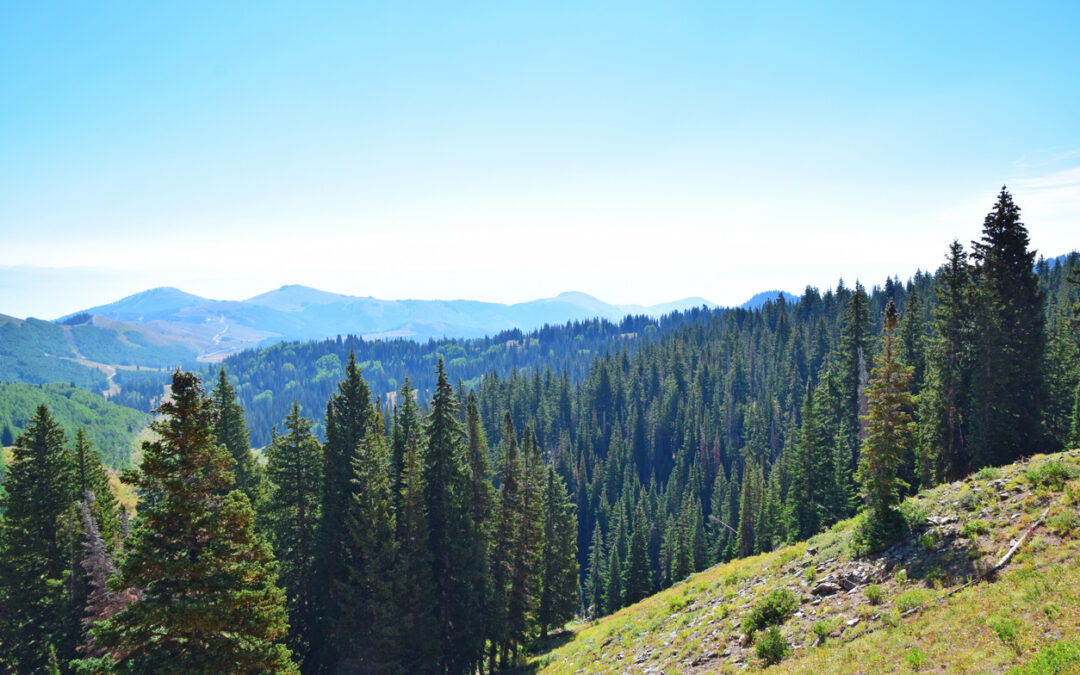
Our logs come from high-elevation country across the Mountain West. Here’s what that environment actually does to the wood.
Slower growth, tighter grain
Trees at high elevation face colder temperatures, shorter growing seasons, and leaner soil. They grow slowly, laying down narrow annual rings year after year.
In softwoods, that tighter ring structure generally means:
- Higher density
- Better dimensional stability
- Cleaner milling and crisper profiles
- Stronger finished boards
It’s a large part of why our Ponderosa Pine and Spruce come off the line as consistently as they do.
Dry mountain air, predictable drying
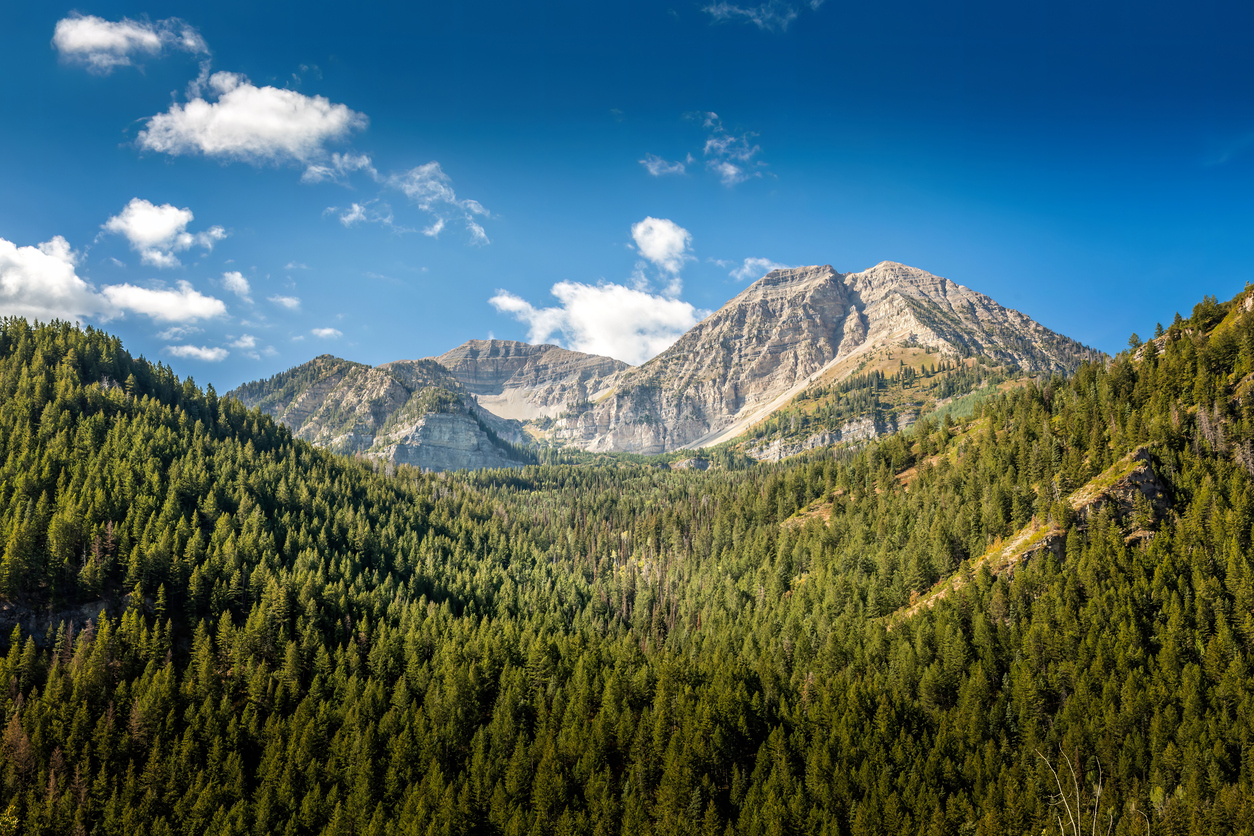
Cold, dry air at elevation means wood sits at a lower equilibrium moisture content than it would in a humid region. For a mill, that matters more than it sounds:
- Less shrinkage through the drying cycle
- More predictable kiln performance
- Lower risk of checking and twisting
That predictability is what lets us stamp KDHT with confidence. Here’s how our kilns work.
“You can't fake tight grain. Either the tree grew slow or it didn't, and elevation decides that long before a log ever reaches our deck.”
Cleaner fiber, cleaner finish
High-elevation softwood tends to come through with fewer knots, more uniform color, and straighter grain. Which means smoother machining, cleaner edges, and a more refined finished product — whether that’s tongue & groove, boards, or timbers.
Is mountain-grown the same as old growth?
No — and the distinction is worth understanding, because the two get conflated constantly.
Old growth refers to a tree’s age: timber from mature, often centuries-old forests. Mountain-grown refers to where it grew and how fast.
What people are usually reaching for when they say they want old growth is the tight ring structure — the dense, slow-grown fiber that old growth is known for. High-elevation timber delivers much of that same characteristic without relying on old growth stands, because the growing conditions produce narrow rings regardless of the tree’s age.
Second-growth lumber from a warm, fast-growing region and second-growth lumber from 8,000 feet are not the same product, even at the same grade.
Sustainability at elevation
Mountain forests grow slowly but regenerate reliably. Responsible harvesting at elevation supports long-term forest health, reduces waste through better utilization, and keeps naturally strong timber in productive use rather than standing dead.
Elevation isn’t a detail on a spec sheet. It’s a performance factor — it shows up as strength, stability, and predictability in every board that leaves here.
Whether you’re building a porch, a cabin interior, or a full timber structure, it’s an advantage you can see and feel in the material.
See the species we mill, or tell us what you’re building — you’ll talk to someone who works at the mill.
Download Our Brochure
For more information on any of our custom products and services, please check our brochure.
Share on Social Media
The Kings Peak Lumber Difference
Kings Peak Lumber combines modern milling with family-owned service to deliver high-quality softwood products you can rely on. We support professional buyers with dependable supply, expert knowledge, and a team that answers the phone when you need us.