
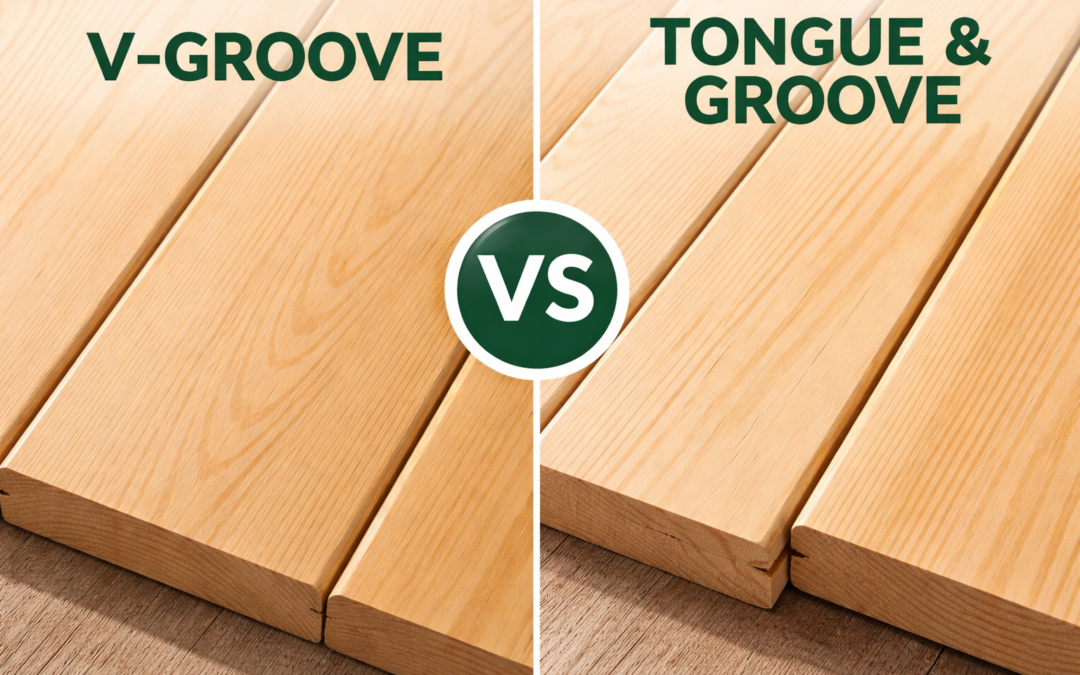
V-Groove vs Tongue and Groove: Which One is Right?
When choosing wood paneling for walls, ceilings, or architectural features, two of the most popular options are V-Groove and Tongue and Groove, often abbreviated as T&G. Both create clean, professional finishes, but they serve slightly different purposes in terms of appearance, installation, and performance. Understanding these differences will help you choose the best option for your project.
This guide explains how V-Groove and Tongue & Groove paneling work, their advantages, common applications, and how to decide which is right for your needs.
What is V-Groove paneling?
V-Groove paneling features boards with a beveled edge that creates a sharp V-shaped groove where each plank meets. This design highlights the lines between boards, giving walls or ceilings a more textured, traditional, or rustic look.
Because the grooves are visible, V-Groove adds visual depth and character to a space. It works well in both modern and classic interiors and is commonly used in farmhouse-style designs, accent walls, and decorative ceiling installations.
V-Groove is mainly chosen for its aesthetic appeal rather than structural strength. It is ideal when the goal is to create a design statement rather than a seamless surface.
What is Tongue and Groove paneling?
Tongue and Groove paneling is designed so that each board interlocks with the next. One side of the board has a raised tongue that fits into a matching groove on the adjacent board. This creates a tight, continuous surface with minimal visible gaps.
T&G paneling is known for its stability and durability. Because the boards lock together, they resist movement, shifting, and separation over time. This makes Tongue and Groove a strong choice for both interior and exterior applications, including siding, structural wall panels, and certain flooring or decking projects.
Where V-Groove emphasizes visible lines, Tongue and Groove prioritizes a smooth, uniform finish.
Key differences between V-Groove and Tongue & Groove
Appearance: V-Groove features decorative V-shaped lines, while Tongue & Groove offers a smoother, seamless look.
Strength: V-Groove is mainly decorative; Tongue & Groove is stronger and more structurally stable.
Performance: V-Groove works best indoors; Tongue & Groove handles temperature and humidity changes better.
Installation: V-Groove is more forgiving; Tongue & Groove requires precision but creates a tighter, longer-lasting fit.
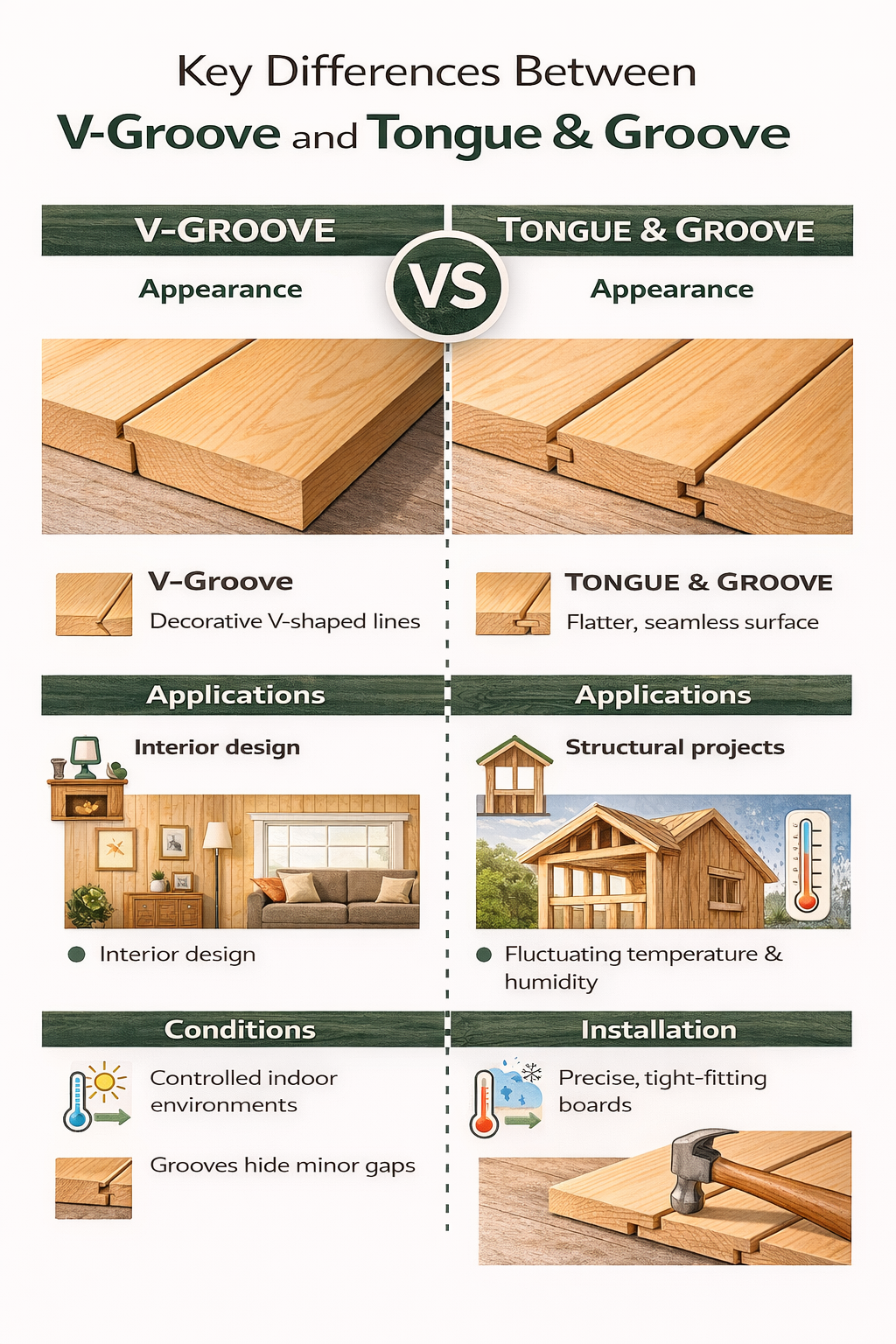
“At Kings Peak Lumber, we don’t just supply wood. We help our customers make the right choice for their projects. Whether it’s the bold, decorative look of V-Groove or the long-lasting strength of Tongue and Groove, we provide guidance, quality lumber, and custom solutions to ensure every project is a success.”
Durability & Cost
Tongue and Groove is better suited for moisture, temperature changes, and exterior use because its interlocking design provides greater strength and stability. V-Groove is ideal for indoor decorative applications where appearance is the main focus. While V-Groove is often more affordable upfront, Tongue and Groove may cost more initially but delivers stronger long-term durability and performance.
Choosing the Right Option
If you want your walls or ceilings to really stand out with character and texture, V-Groove is a great choice. For projects where strength, stability, or a smooth, seamless look is important, especially outdoors, Tongue and Groove is the way to go. By working directly with us, you get more than just lumber: you get consistent quality, the ability to customize profiles, expert guidance, and better value without the middlemen.
Brochure
For more information on any of our custom products and services, please check our brochure.
Share on Social Media
Latest Industry News & Product Updates
Stay informed with the newest trends, product information, and insights from the lumber and sawmill industry.